How I Grew My LinkedIn Following to 40,000 in One Year
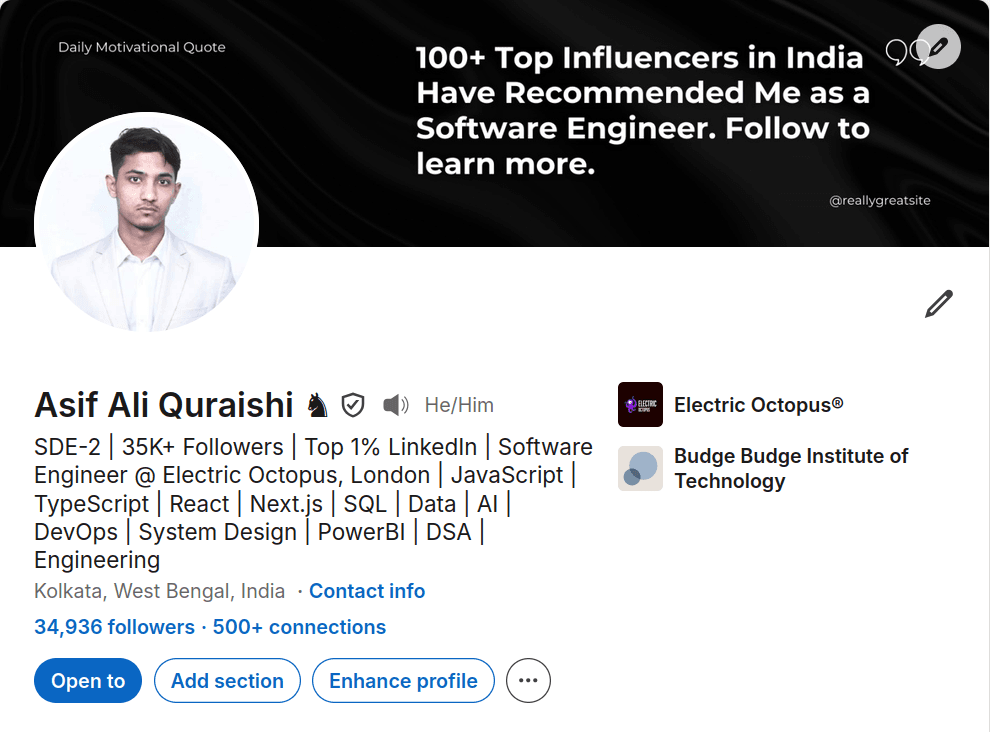
How I grew my LinkedIn audience from zero to 40,000 followers in approximately one year through consistent content, profile optimization, daily engagement, and a commitment to sharing useful knowledge.
How I Grew My LinkedIn Following to 40,000 in One Year
Growing an audience on LinkedIn doesn't happen overnight.
When I started focusing on building my presence, I wanted to do more than simply collect connections. I wanted to create a professional identity, share useful knowledge, connect with people in the technology industry, and build an audience that could learn something from my content.
Over approximately one year, I grew my LinkedIn following from zero to 40,000.
It wasn't about finding one magic trick. It was about showing up consistently, improving my content, building a recognizable profile, and learning what makes people stop scrolling and engage with a post.
In this article, I'll share the principles behind my journey and the lessons other developers, students, job seekers, and aspiring creators can apply to their own LinkedIn presence.
My LinkedIn profile: linkedin.com/in/asifaliquraishy
1. Start With a Strong Profile
Before focusing on growing an audience, make sure your profile communicates who you are and why someone should follow you.
Your profile is often the first thing people visit after discovering your content. If it doesn't clearly explain what you do or what you share, you may lose an opportunity to turn a visitor into a follower.
I believe a strong LinkedIn profile should answer three questions:
- Who are you?
- What do you know or work on?
- Why should someone follow you?
The profile elements that matter
Profile photo: Use a clear, professional photograph that makes your profile recognizable.
Headline: Don't limit yourself to a job title. Communicate your expertise, interests, or the value you provide.
Banner: Use the available space to reinforce your professional identity and the topics you discuss.
About section: Explain your background, interests, skills, and professional goals in a natural voice.
Featured section: Highlight your strongest posts, projects, portfolio, and other work you want visitors to discover.
Experience and skills: Keep your information accurate and up to date.
A profile doesn't need to look extravagant. It needs to be clear, credible, and consistent with the content you publish.
2. Consistency Matters More Than Occasional Bursts of Activity
One of the biggest lessons I've learned is that building an audience requires consistency.
Publishing several posts in one week and disappearing for the next month makes it difficult to develop a recognizable presence.
A sustainable publishing routine gives people more opportunities to discover your work and helps you learn through repetition.
Instead of waiting for the perfect idea, build a routine you can maintain.
For example:
- Plan content topics in advance.
- Publish useful posts consistently.
- Review how people respond.
- Improve your writing and presentation.
- Continue experimenting with new ideas.
Consistency doesn't mean publishing for the sake of publishing. Every post should offer something useful, interesting, or worth discussing.
The goal is to become a familiar, valuable voice in your niche.
3. Share Content That People Can Actually Use
A LinkedIn post has a better chance of being useful when readers can apply something they learned to their own work or career.
I believe educational content is particularly valuable for technology professionals because people are constantly learning new tools, preparing for interviews, improving their skills, and looking for better ways to work.
Here are several content formats worth exploring.
Technical cheat sheets
Create clear, easy-to-understand references for topics such as:
- JavaScript and React
- Next.js and TypeScript
- SQL queries and database concepts
- Excel and Power BI
- Python and data analytics
- Git and GitHub workflows
A good cheat sheet organizes information so readers can understand or revisit a concept quickly.
Step-by-step tutorials
Break a complicated topic into manageable steps.
For example, instead of writing only about React performance, explain a specific optimization, show a code example, and discuss when that technique is useful.
Career and interview resources
Share practical guidance on preparing for technical interviews, improving a resume, building projects, and navigating the job search.
Make sure advice is accurate, original, and based on knowledge you can explain.
Lessons from real projects
Building software provides opportunities to discuss architecture, debugging, performance, accessibility, and development workflows.
Sharing the reasoning behind a technical decision can be more valuable than simply announcing that a project is complete.
Visual explanations
Diagrams, annotated screenshots, tables, and handwritten-style notes can make complicated concepts easier to understand.
The format should support the information rather than distract from it.
4. Make Your Content Easy to Read
People frequently browse LinkedIn between meetings, during breaks, or on their phones.
A wall of text can make even a useful idea difficult to follow.
I recommend structuring posts so readers can quickly understand the main point.
A practical format is:
- Opening: Introduce a problem, question, or surprising insight.
- Context: Explain why the topic matters.
- Main content: Share the lessons, examples, or steps.
- Takeaway: Summarize the most important point.
- Discussion: Invite readers to share a relevant experience or perspective.
Use short paragraphs, descriptive headings where appropriate, and simple language.
Avoid unnecessary jargon when a straightforward explanation will work.
You don't need to make every post viral. You need to make your ideas understandable and worth someone's time.
5. Build a Recognizable Content Identity
When someone visits your profile, your posts should give them a reasonable idea of what they can expect if they follow you.
That doesn't mean every post must look identical. It means your topics and presentation should reflect a coherent professional identity.
For example, a software engineer might focus on:
- Practical programming knowledge
- Developer tools and workflows
- Project-building lessons
- Career development
- Technical learning resources
Choose topics that match your actual interests and expertise.
You can experiment with different formats while maintaining a clear connection between your content and your professional goals.
A recognizable identity also makes it easier to decide what to publish next.
6. Engage With Other People, Not Just Your Own Posts
Publishing content is only one part of building a professional presence.
LinkedIn is also a place for conversations, knowledge sharing, and networking.
Meaningful engagement can help you discover new perspectives, connect with professionals in your field, and become part of relevant discussions.
Here are some habits worth developing:
- Leave thoughtful comments on posts related to your interests.
- Ask genuine questions when you want to understand someone's perspective.
- Respond to comments on your own posts.
- Congratulate people on meaningful professional milestones.
- Participate in discussions where you can contribute something useful.
- Build relationships with people whose work you genuinely value.
A useful comment adds an observation, explains an idea, or asks a relevant question.
Simply writing "Great post!" on hundreds of posts doesn't offer the same value as contributing something meaningful.
Treat engagement as a way to build relationships and exchange knowledge, not merely as a tactic to increase reach.
7. Learn From Your Analytics
Creating content without reviewing its performance makes it harder to understand what resonates with your audience.
LinkedIn's available post analytics can help you evaluate how people interact with your content.
Depending on the metrics available to your account, you can review impressions, engagement, and audience growth.
Look for patterns rather than judging every post individually.
Questions worth asking include:
- Which topics consistently attract relevant readers?
- Which posts generate thoughtful discussions?
- Are people saving or sharing educational resources when those metrics are available?
- Which formats communicate complicated ideas most effectively?
- Are profile visits translating into new followers?
- Which posts attract the professional audience you want to reach?
Use these observations to improve your future content.
However, remember that performance varies. A post's reach can depend on its topic, timing, audience, competition, and other factors.
No single metric tells the whole story.
8. Experiment Without Chasing Every Trend
It's tempting to copy every popular post format or jump between unrelated topics because they appear to be performing well.
Experimentation is useful, but it should support a larger strategy.
Try different approaches:
- Short educational posts
- Detailed tutorials
- Document-style posts
- Technical diagrams
- Personal lessons
- Questions that invite meaningful discussion
Then evaluate what works for your audience and your goals.
Don't assume that a successful format will produce the same results for everyone.
And don't sacrifice accuracy or originality simply because a particular style is trending.
Your reputation develops over time. Protecting it matters more than maximizing the reach of one post.
9. Make Consistency Sustainable
Building an audience takes time, and content creation can become exhausting if every post requires starting from scratch.
A simple workflow can help.
Plan
Keep a list of topics, questions, technical concepts, and lessons you could turn into posts.
Create
Write drafts in batches when possible. Prepare examples and visuals that help communicate your ideas.
Publish
Follow a realistic schedule that fits your work, learning, and personal responsibilities.
Engage
Set aside time to respond to relevant discussions and interact with your audience.
Review
Periodically examine your content and identify opportunities to improve.
You don't need to spend every waking hour on LinkedIn.
The objective is to develop a repeatable process that supports your professional life rather than replacing it.
10. Understand That Followers Are Only One Measure of Progress
Reaching 40,000 followers is a meaningful milestone in my journey, but follower count alone doesn't define the value of a professional network.
A large audience can create opportunities for conversations, collaboration, learning, and visibility. It doesn't automatically guarantee employment, business success, or meaningful relationships.
Pay attention to other outcomes, too:
- Are you learning from the people you meet?
- Are your posts helping someone understand a difficult topic?
- Are you developing stronger communication skills?
- Are you connecting with relevant professionals?
- Is your online presence accurately representing your work?
- Are you building relationships that continue beyond individual posts?
These are important questions because the purpose of professional networking is not simply to accumulate numbers.
It's to create opportunities to learn, contribute, and connect.
What I'd Tell Someone Starting From Zero
If I were advising someone who wanted to develop a LinkedIn presence, I would suggest starting with a few fundamentals.
First, optimize your profile. Make it clear who you are and what you offer.
Second, choose a few relevant content themes. Start with subjects you genuinely understand or are actively learning.
Third, publish consistently. Choose a realistic schedule and focus on usefulness rather than volume.
Fourth, participate in conversations. Engage thoughtfully with people in your professional community.
Fifth, review and improve. Learn from your results without becoming obsessed with individual posts.
Finally, be patient. Audience growth is not perfectly predictable, and your results will differ from those of other creators.
There is no guaranteed formula for reaching a particular follower count in a particular amount of time.
What you can control is the quality of your contributions, the consistency of your effort, and the way you treat the people you meet along the way.
Final Thoughts
Growing my LinkedIn following to 40,000 in approximately one year has been an important part of my professional journey.
It has reinforced the value of consistency, clear communication, useful content, and active participation in a professional community.
More importantly, it has given me an opportunity to share knowledge, explore ideas, and connect with people beyond my immediate professional circle.
If you're starting from zero, don't let the size of someone else's audience discourage you.
Focus on becoming useful to the people you want to reach. Keep improving your work, share what you learn, and give your professional relationships time to develop.
You don't need to become an overnight success.
You need a reason to start, a process you can sustain, and the willingness to keep learning.
Connect with me on LinkedIn: Asif Ali Quraishi
Thanks for reading.